Donate

You can support MATRIX along with the development of our tools, resources, and research with your donation, find out how.

Project Highlights

GradHacker Joins Inside Higher Ed

MATRIX is very happy to announce that GradHacker (www.gradhacker.org) will be appearing on Inside Higher Ed.  Edited by MSU grad students Alex Galarza (PhD Candidate in the Department of History and Cultural Heritage Informatics Graduate Fellow) and Katy Meyers (PhD student in te Department of Anthropology and past Cultural Heritage Informatics Graduate Fellow), GradHacker is ...

Everyday Islam in Kumasi Website Launched

Everyday Islam in Kumasi MATRIX is pleased to announce the launch of a new website, Everyday Islam in Kumasi: Devout Lay Men and Women in Daily Life. This growing collection of video interviews and photographs features the voices of Muslim men and women who live and work in Kumasi, the second largest city in the West African country of Ghana. ...

Africa Past and Present posts Episode 50

April 1st, 2011 by Scott Pennington

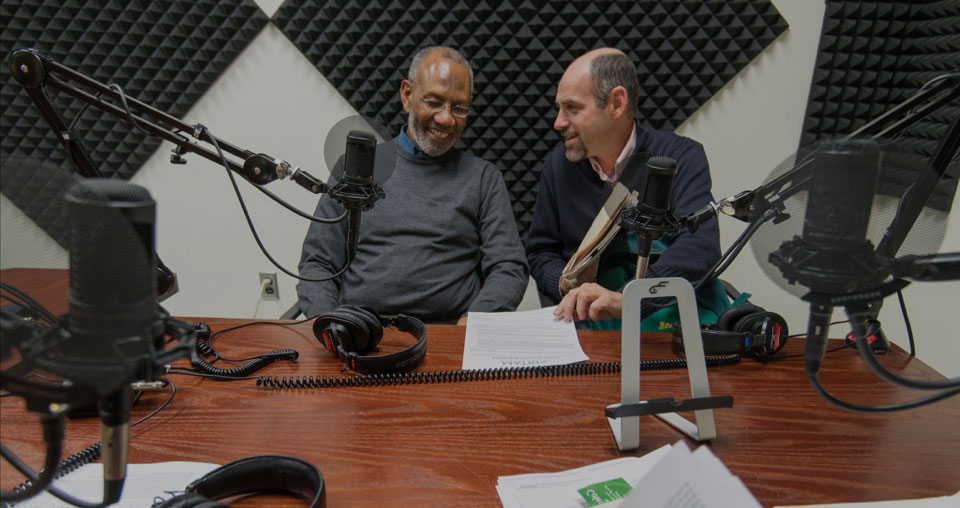
Africa Past and Present is co-hosted by Michigan State University historians Peter Alegi and Peter Limb and produced by Matrix.

This fiftieth episode marks over three years of a podcast that is now downloaded monthly by nearly 20,000 listeners in over 80 countries. Matrix is proud to be part of such an ongoing success, and hopes the show continues to expand in scope and audience.

Horace Campbell

Horace Campbell

Episode 50: Political Change in Africa and the Diaspora is now live at http://afripod.aodl.org

Horace Campbell (African American Studies and Political Science, Syracuse U.) on political change in Africa and the Diaspora. Focus is on the revolution in Libya, popular revolts, war, peace, and neo-liberalism in Africa and beyond. Campbell also shares insights from his new book: Barack Obama and 21st Century Politics: A Revolutionary Moment in the USA.

MATRIX Developers Participate in Lansing Give Camp 2011

March 27th, 2011 by Matt Geimer

MATRIX developers participated for the second year this weekend at Lansing Give Camp, held at Impression 5 Science Center in Lansing, MI.  Give Camp is a great event put on to connect local web developers with non-profit groups who need assistance developing their websites and enhancing their ability to conduct various aspects of their daily operations.  In total over 100 developers participated with 13 non-profit groups.  A conservative estimate of over $100,000 of work was donated by the coders taking the time to give back.

The weekend was filled with coding with technologies for the MATRIX developers such as Ruby, HAML, CSS, and Sinatra, as well as development techniques such as test driven development and behavior driven development.  The developers were also exposed to GIT, a decentralized versioning control system that is very popular currently in the open source community.  Events such as this allow the developers at MATRIX to network with great people as well as learn new technologies that they can then apply in their daily work.  The group included Matt Geimer, CTO of MATRIX, and a special thanks goes out to the MATRIX developers who participated:

  • Chelsea Carr
  • Sarah Godoshian
  • Lisa Kelly
  • Cassi Miller
  • Tim Miller
  • Madalyn Parker

A very special thanks goes to the generous event sponsors and organizers as well – it wouldn’t be possible without them!  Thanks for the great swag and prizes that were offered up (and some wonderful dev tools were won by MATRIX folks)!

Quilt Index Surveying International Collections

March 21st, 2011 by Justine Richardson

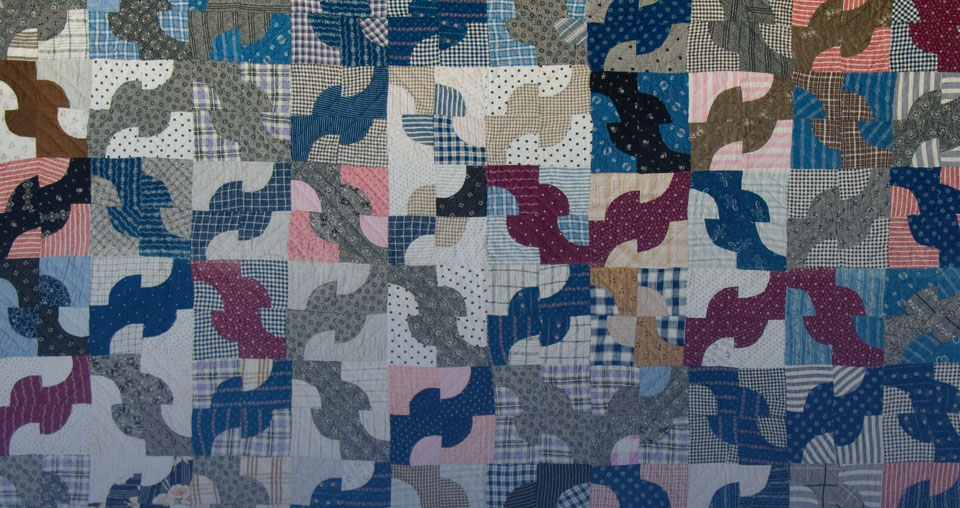
The Quilt Index launched a survey today to gather descriptions of quilt collections across the globe. The survey is part of a collaborative planning process to expand the Index, funded by the U.S. Institute for Museum and Library Services.

The survey will help develop international partnerships, as well as build on a public listing of international collections of quilts and quilt documentation.

Results will be added to a resource page listing quilt collections on the Quilt Index Wiki.

If you know about, own, or serve as custodian for quilt documentation, individual quilts, or quilt collections located outside the United States, we would love to hear from you. Click here to participate in the survey.

The Quilt Index is a partnership of MATRIX, Michigan State University Museum and The Alliance for American Quilts. The collaborative planning process also involves the International Quilt Study Center & Museum.

MATRIX Welcomes Cultural Heritage Informatics Graduate Fellows

March 2nd, 2011 by Ethan Watrall

MATRIX is extremely happy to welcome this year’s cohort of Cultural Heritage Informatics Graduate Fellows.  Hosted by the Department of Anthropology in partnership MATRIX, the CHI Fellowship program offers MSU graduate students (in cultural heritage focused departments) the theoretical and methodological skills necessary to creatively apply information, computing, and communication technologies to cultural heritage materials.  In addition, the fellowship provides graduate students with the opportunity to influence the current state of cultural heritage informatics and become leaders in the future of cultural heritage informatics. During the course of their fellowship (which lasts an academic year), fellows will develop a significant and innovative cultural heritage informatics project.

This year’s fellows show great promise, and we are very much looking forward to their projects and their contributions to the field of cultural heritage informatics.

Jennifer Bengtson

Jennifer is a PhD Candidate in the Department of Anthropology. She is primarily interested in the bioarchaeology of Late Prehistoric Midwestern peoples – specifically in issues of gender, health, and social complexity in the Lower Illinois Valley  Late Woodland-Mississippian transition.  Jennifer has worked extensively on the excavation of the Morton Village site, a late prehistoric village in the central Illinois River Valley near Lewistown, Illinois.

During her fellowship, Jennifer will be developing a digital repository for Mississippian archaeology and archaeologists.  The project will involve the collection, digitization, and organization of materials such as maps, photographs, field notes, publications, gray literature, bibliographies, websites, and raw data within a single digital repository, which will be generally organized by site. The repository will function to preserve materials in a digital format while improving scholarly accessibility and providing an integrated, searchable network of relationships between diverse types and sets of information.

Katy Meyers

Katy is a PhD student in the Department of Anthropology.  Before coming to MSU, Katie received her Masters of Science in Human Osteoarchaeology from the University of Edinburgh.  In addition to being a CHI Fellow, Katy is also a MSU Campus Archaeology Graduate Fellow.  Katy also writes regularly on bioarchaeology and mortuary archaeology at her site www.bonesdontlie.com

During her fellowship, Katy will be working on The Bone Collective, a Wiki where methods and theories for bio- and osteo-archaeology can be easily accessed and updated by the academic public (in the domain), but moderated by a group of noted content experts in the field.  The project is particularly exciting as it addresses and explores (and even challenges) some of the characteristics of traditional scholarly communication and publication.

Jennifer Lee Sano-Franchini

Jennifer is a PhD student in Rhetoric and Writing (in the Department of Writing, Rhetoric, and American Cultures).  Her research interests lie in the areas of modern rhetoric theory, cultural rhetorics, Asian & Korean American rhetorics, transnationalism, digital rhetoric, research methodologies, popular music, intellectual property, and composition studies.  In addition to being a CHI Fellow, Jennifer is Historical Archivist Representative for the CCCC Asian/Asian American Caucus. In this capacity, she works on the Writing and Working for Change: A Digital Archive of Social Activism by Teachers of NCTE project.

During her fellowship, Jennifer will be developing a resource for teaching and learning research.  While the primary goal of the project is to serve as a resource to facilitate student research as well as writing instruction in college-level composition courses, the larger purpose of the project is to facilitate more collaborative understandings of writing, research, and knowledge-making.

Micalee Sullivan

Micalee is a PhD Candidate in the Department of History. She is primarily interested in international labor and working class history with an emphasis on South Africa and Chicano history. Her dissertation research focuses on a comparative analysis of colonial systems and working class community formation in both South Africa’s diamond mines and Arizona’s copper mines at the turn-of-the-twentieth century.  During her fellowship, Micalee will be working on a digital archive based on her research: “Sixteen Tons”: A U.S. and South African Mineworkers’ Archive.  The project is not only intended to provide materials for scholars interested in international labor and working class history, but act as an educational tool for teachers and students who are interested in studying a range of topics in history including labor, migration, community, gender, citizenship, colonialism, and comparative history.


MATRIX participates in designing best practices for Oral History

March 1st, 2011 by Scott Pennington

As part of MATRIX’s collaborative IMLS grant to develop best practices for conducting oral history in a digital age, Scott Pennington, Head of MATRIX’s Digital Lab, traveled to New York recently to meet with the Oral History in the Digital Age (OHDA) Video curating group and advisors. Participants, including collaborators from the private sector as well as Columbia University Library, began to outline and write best practices for collecting and curating digital video for oral historians. The group’s ultimate goal is to identify new methods for collecting, curating, and distributing data as oral history moves from analog audio to digital video recording. The OHDA best practices guide is on target to enter final draft status by the end of April.


MATRIX collaborating with School of Telecom TOIL Lab

February 14th, 2011 by Joseph Deming

MATRIX System Administrator and Architect, Joseph Deming, is working with Michigan State University’s The Online Interaction Laboratory (TOIL) to rework and improve the systems that drive their long-running web service.  This system restructuring will enhance their research capabilities while providing valuable information for online research, as well as standardize and further stabilize the online environment which the system hosts.

TOIL is a research center, located in the Telecommunications building at MSU, currently being funded by a grant from the National Science Foundation (NSF).  TOIL explores “the ways by which identity, perceptions, group process, and supporting offline environments enable individuals and groups to use and design tools to meet their goals.” TOIL houses the home-grown web application “www.everything2.com“.  This site started as a publicly editable, semi-anonymous site for posting information covering topics on anything and everything, developed by a University of Michigan School of Information graduate student named Nathan Oostendorp.  It has evolved into a heavily used, high-traffic site where new content is added from all over the world, constantly covering any imaginable range of topics.  TOIL is now using this website to track trends and make research observations on people’s use and habits of “social networking” sites.

www.everything2.com has grown into a site that has outlived the hardware on which it was founded and needs a background re-work to bring it up-to-date and keep it stable in its current and future capacity.   Deming will use his expertise in systems management, virtualization and programming to restructure the systems driving www.everything2.com creating a simplified build, managed-configuration, automated-updating system to manage and stabilize their systems.  This system will be based on the similar, homegrown, larger-scale management system he has created to drive the 40+ server systems at MATRIX.  This project is expected to reach completion and implementation by late February.

iSchool Intern Works on Video Preservation at MATRIX

January 25th, 2011 by Catherine Foley

Jesse Johnston, master’s degree student at the School of Information at the University of Michigan, is collaborating with Catherine Foley, MATRIX Digital Librarian, to finalize videotape preservation policies and documentation for the American Black Journal archive.

Screenshot of American Black Journal Online ArchiveAmerican Black Journal went on the air in 1968 as a televised public forum for black citizens during an historic moment of racial turmoil across the United States.  Detroit Public Television (DPTV) has broadcast the program continuously since then.  As a result the ABJ video collection represents one of the most extensive audio-visual records of local African American culture and history in existence.

Since 2000, DPTV and MATRIX have worked together to catalog, provide access to, and preserve the American Black Journal videotape collection.  Toward these goals and in fulfillment of a National Endowment for the Humanities Preservation and Access grant, Johnston and Foley are describing current videotape preservation and access practices at MATRIX and defining a preservation framework for the ABJ digital video collection.

KORA 2.1.1 Now Available

January 7th, 2011 by MATRIX

A new version of KORA has been released, version 2.1.1. It has been approximately one year since KORA 2.0 Beta was released and 2.1.1 builds upon it and the production version of 2.0 greatly. This version includes many new features such as public ingestion support, XML import/export, advance search, and some user interface tweaks. The full information is available at the KORA Sourceforge site. Developer and user documentation are included as always in the ‘docs’ folder. The next version (KORA 3.0) is currently under development and will include some performance gains as well as an improved version updater.

Much thanks to the entire MATRIX Programming team and the many users of KORA for giving lots of feedback and continually working to improve KORA!

Africa Past & Present, Episode 46: Popular Politics in Southern Africa

November 30th, 2010 by MATRIX

Landau's book

Africa Past and Present is hosted by Michigan State University historians Peter Alegi and Peter Limb and produced by Matrix.

Historian Paul Landau (University of Maryland) on rethinking the broad history of Southern Africa from 1400 to 1948. His new book re-asserts African agency by seeing Africans in motion, coming out of their own past. Drawing on oral traditions, genealogies, 19th-century conversations, and other sources, Landau highlights the resilience of African political cultures and their adeptness at incorporating diverse peoples.

Africa Past & Present, Episode 45: Terence Ranger and the Making of History in Africa

November 6th, 2010 by MATRIX

Africa Past and Present is hosted by Michigan State University historians Peter Alegi and Peter Limb and produced by Matrix.

In this episode, Prof. Terence Ranger (Emeritus, University of Oxford) discusses his many contributions to African Studies and African History, how these themes have developed, and also his 17th book, Bulawayo Burning (2010). This is the first of three podcasts recorded at the‘Making History: Terence Ranger and African Studies’ conference, University of Illinois at Urbana-Champaign October, 2010.

Listen

Subscribe to the podcast