Donate

You can support MATRIX along with the development of our tools, resources, and research with your donation, find out how.

Project Highlights

Why Digital Technologies and Oral History Belong Together

Oral History in the Digital Age logo The Library of Congress through The Signal: Digital Preservation blog recently posted an article about Doug Boyd, director of the Louie B. Nunn Center for Oral History at the University of Kentucky Libraries. In the post, Boyd talks about using digital technology to collect, curate, distribute, and preserve oral histories. Boyd recently partnered with MATRIX on ...

Vietnam Project Archive Receives Attention from the Lansing State Journal

The Lansing State Journal recently posted an article entitled MSU, the CIA— and Vietnam. This article contains portions of interviews with the primary investigators for the MSU Group Vietnam Project Archive, a digital preservation and access collaboration between the University Archives & Historical Collections at MSU and MATRIX. This project, which has received significant NEH ...

Vietnam Project Archive Receives Attention from the Lansing State Journal

February 21st, 2013 by Rebecca Zantjer

The Lansing State Journal recently posted an article entitled MSU, the CIA— and Vietnam. This article contains portions of interviews with the primary investigators for the MSU Group Vietnam Project Archive, a digital preservation and access collaboration between the University Archives & Historical Collections at MSU and MATRIX. This project, which has received significant NEH funding, seeks to digitize and make available online a number of primary source documents, photographs, and maps which detail a Michigan State University nation-building program in South Vietnam from 1955-1962. MSU worked with the American government in South Vietnam for the purpose of producing a stable, non-Communist country in the Cold War era. Although their efforts eventually failed, the MSU Vietnam Group Archive project contains rare and valuable data about life in South Vietnam immediately prior to the Vietnam War. MATRIX is working with the University Archives & Historical Collections to digitize and archive these primary source materials and their accompanying metadata using KORA, an open-sourced, browser-based digital repository developed by MATRIX. To learn more about the project, browse this description of the archives or an older blogpost by MATRIX which introduces the project.

MATRIX Hosts Day of DH 2013

February 18th, 2013 by Rebecca Zantjer

We are very happy to announce that MATRIX will host Day of DH 2013.  An initiative of CenterNet, Day in the Life of the Digital Humanities (Day of DH) is an open community publication project that  brings together scholars interested in the digital humanities from around the world to document what they do on one day.  This year, Day of DH will take place on April 8th. The goal of the project is to create a web site that weaves together a picture of the participant’s activities on the day which answers the question, “Just what do digital humanists really do?” Participants  document their day through photographs and text, all of which is published on a community online platform (which, for this year, lives at dayofdh2013.matrix.msu.edu). Both during and after the day, people are encouraged to read and comment on their fellow participant’s posts.  Eventually, all the data will be grouped together, undergo some light semantic editing, and released for others to study. We hope that, beyond the original online publication, the raw data will be of use to those interested in further visualization or digital community ethnographic research.

For more information on this year’s Day of Dh event, check out the introductory post at http://dayofdh2013.matrix.msu.edu/blog/2013/02/14/ready/

GradHacker’s National Audience Recognized by Lansing State Journal

February 12th, 2013 by Rebecca Zantjer

The Lansing State Journal recently released an article celebrating the national growth and prominence of GradHacker. GradHacker is a blog written by and for graduate students that discusses issues and themes common to students enrolled in GradHacker Logograduate programs. Typical posts cover both professional and personal concerns, with recent topics including the proper usage of social media with professional colleagues, how to survive a dissertation, and the way memes can be used within media studies. The most recent GradHacker podcast interviews Michigan State University’s Graduate School Dean, Karen Klomparens about factors to consider when applying to graduate schools.

GradHacker was founded by a number of graduate students at MSU, including Alex Galarza and Katy Meyers. They conceived of the idea while enrolled in the Cultural Heritage Informatics Initiative led by Dr. Ethan Watrall, associate director of MATRIX and now advisor for the GradHacker project. GradHacker’s steady rise in popularity has led to national and international attention on both a) the unique challenges faced by graduate students and b) the quality of work being done by graduate students both at Michigan State University and other institutions.

MATRIX has been pleased to continue to support the development of the GradHacker platform as well as the professional development of the graduate students who created it. We invite you to learn more about the project by reading the LSJ article or to explore GradHacker for yourself at www.gradhacker.org. GradHacker can also be read on InsideHigherEd.com at http://www.insidehighered.com/blogs/gradhacker.

Matrix Donates Time to Worthy Cause: Belize Inspiration Center Website Launch

February 11th, 2013 by MATRIX

final_gala_flyer_2Matrix is pleased to announce the launch of the Belize Inspiration Center’s new website at www.belizeinspirationcenter.org/.

The Belize Inspiration Center is a non-profit organization that seeks to provide advocacy and assistance to persons (especially children) living with physical, mental, and social disabilities in Belize. These children often struggle to receive the additional attention and support they need due to the lack of awareness, lack of resources, and social stigmas associated with disabled persons in poorer communities. A 2005 situational analysis of disabled children in Belize found that these children were being tied up, regularly beaten, abused, neglected, and were not receiving the care necessary for their continued development. Compounding this problem is the lack of government funding and social services given to families of disabled persons. This has lead to almost complete dependence on non-profit services to care, advocate, and support children with disabilities in Belize.

The Inspiration Center seeks to answer this need. The Inspiration Center is a newly constructed, barrier-free facility that combines all-in-one access to medical services, physical therapy rooms, social stimulation rooms, handicap-accessible play areas, and educational centers (mostly in therapeutic art and music) to give comprehensive assistance to children living with disabilities. The Inspiration Center will also structure interactions between fully-abled and differently-abled children to teach a new generation of children about how to interact and respect children with disabilities.

MATRIX has been privileged to work with the Belize Inspiration Center by freely donating time and staff support to design, build, and host the new website. We see this work as being important to our mission of digital inclusion and accessibility. We encourage you to explore the new site to learn more about the Belize Inspiration Center and to consider partnering with them in their efforts to create a disability-friendly Belize.

MATRIX Travels to Senegal to Train Students in 3D Digital Preservation and Dissemination of Archaeological Artifacts

January 14th, 2013 by Rebecca Zantjer

Picture of the archives in the Senegal museum.In late December of 2012, MATRIX Director Dean Rehberger and Audio-Visual Lab Consultant Mike Green traveled to Senegal at part of a Smithsonian-funded pilot project that focused on creating 3D, digital representations of cultural heritage artifacts from the Gorée  Island excavations. The team used a process called stereophotogrammetry to create the 3D representations, which will then be shared freely online in the Gorée Island Archeological Digital Repository.

Stereophotogrammetry is the practice of taking high-quality digital still photographs in a circle around an object. These photographs are then fed into a computer program that uses the photographs to define and triangulate specific geometric points on the object. These geographic points are then matched throughout all the photographs taken of the object (which can often range from between 50-100 images) and are used to create 3D representations of the artifact. Stereophotogrammetry is a relatively inexpensive and mobile process, making it ideal for Africa-based cultural institutions who typically have lower budgets and need the capacity to document objects both within the museum and in the field.

MATRIA picture of a Senegalese student performing stereophotgrammetric work on a cultural artifact.X’s trip to Senegal was intended to serve as a brief training session where Rehberger and Green taught local Senegalese students how to complete the work of stereophotogrammetry. This included instruction on how to use DSLR cameras, how to take high quality photographs, how to set up equipment, and how to manipulate images in the 3D photo creation software. During their one-week stay, Rehberger and Green were able to host three full days of training, which resulted in six Senegalese students now being trained in the art of stereophotogrammetry. These six students are now able to train other students, resulting in a multiplication of equipped personnel who can begin cataloging and preserving the extensive archives of archaeological artifacts that exist at Gorée Island (and in Senegal as a whole). In this way, the Senegalese cultural institutions are self-sustaining and are not dependent on outside help to complete importation documentation and preservation work.

The trip to Senegal was meant to serve as a test bed for future projects that will help create a larger, 3D digital repository of African cultural heritage materials as a way of both preserving the materials themselves and as a method of sharing these materials to scholars in an open-source, open-access digital environment. This project addresses dire needs in the African cultural heritage community, including a lack of best-practice-ready heritage institutions and personnel within Africa; a history of colonial bias in artifact description and preservation; and the rapid degradation of cultural materials in Africa due to politics, wars, environmental concerns, and time.
The Gorée Island Archaeological Digital Repository is made possible through active collaboration between MATRIX, Michigan State University,  AFRICOM, the Smithsonian Institution, the Association of African American Museums, and the American Association of Museums (now the American Alliance of Museums). MATRIX is excited to continue our tradition of international partnerships in order to preserve and disseminate these important cultural heritage materials in digital spaces.

Civil War Letters Archive Rehumanizes “Big Data”

November 8th, 2012 by Rebecca Zantjer

In October 2012, the Michigan State University’s Archives & Historical Collections, in collaboration with MATRIX, launched a new website entitled the Civil War Archives at http://civilwar.archives.msu.edu/. This website contains an online digital archive of hand-written letters and photographs sent from and to Michigan soldiers who participated in the Civil War. This website’s goal is to educate students and citizens about the Civil War and re-humanize the individuals who fought and died during the conflict.

The Civil War Archive is built using KORA, an open-source, browser-based content management system created and produced by MATRIX that allows organizations to build digital repositories that preserve both digital objects and their related metadata. KORA has a flexible and customizable metadata scheme, which allows it to be used with any data set. KORA also contains a record associator which gives MATRIX the capability to link a digital object with it’s corresponding metadata and/or related objects (i.e. letters and photographs from the same individual). This allows for the creation of complex digital objects that tell stories and continue MATRIX’s goal of re-humanizing big data.

Beginning in the spring of 2010, researchers at Michigan State University’s Archives & Historical Collections began digitizing their collection of hand-written letters and photographs sent to and from Michigan soldiers in the Civil War. The letters are addressed to soldiers’ friends, family, and sweethearts and describe some major battles (including the Battle of Gettysburg) from the soldiers’ perspectives.

The presentation of information in this archive is unique in that it displays both the digitized copy of the letter and a typed transcript of the document side-by-side. Having both views appear simultaneously on the screen allows users to toggle seamlessly between the two documents. The collections in this archive are grouped by both donating family and Michigan regiment to allow for the quick location of interested records.

To learn more about the archive and its creation , read this article by MSU News. Similarly, if you’re interested in learning more about MATRIX’s efforts to re-humanize big data, browse a recent blog post describing a Ethan Watrall’s talk on Big Data, Small Stories: Community, Collaboration, and User Experience in the Age of Digital Cultural Heritage or read about MATRIX’s participation in the Slave Biographies and Digging into Data projects.

New Episode of Africa Past & Present Released

November 1st, 2012 by Rebecca Zantjer
Episode 67 of Africa Past & Present was released earlier this week. This episode featured Dr. Sifiso Ndlovu from the South African Democracy Education Trust (SADET)—a group of researchers tasked with documenting South Africa’s journey to democracy (read more about this research here).
In this podcast, Dr. Ndlovu reflects on the Soweto 1976 rising (a series of protests by black South African students over the introduction of Afrikaans as a language of instruction). He also shares personal and professional perspectives on challenges and contributions of African historians and reflects on the writing and editing SADET’s The Road to Democracy in South Africa series and the importance of orality and African languages in Zulu history and in rewriting South Africa’s past.
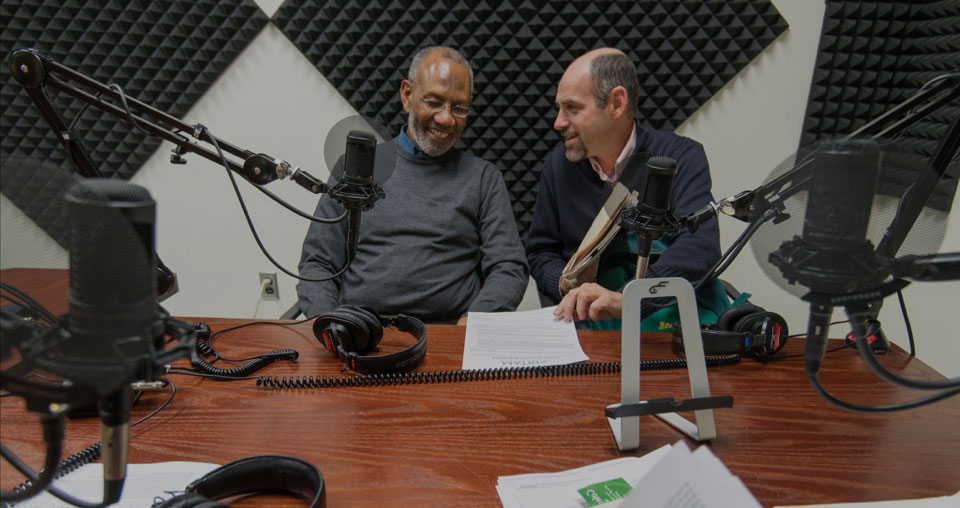
Africa Past & Present— the podcast about African history, culture, and politics —is a joint production between MATRIX and the MSU Department of History. To learn more about the project, or to freely download the latest podcast, visit the Afripod website at http://afripod.aodl.org/.

What Role Should Humanities Centers Play in the Future of Graduate Education?

October 30th, 2012 by Rebecca Zantjer

That was the topic of conversation at the latest Mellon Funded Scholarly Communication Institute (SCI) held at the Maryland Institute for Technology in the Humanities (MITH) between October 22nd-October 23rd,2012. MATRIX Associate Director Ethan Watrall was invited to attend this institute, which focused on discussing what skills and pedagogical needs graduate students in the humanities will require to succeed in the digital age— as well as how traditional and digital humanities centers can intervene effectively in the transmittal of those skills and pedagogical processes to best prepare graduate students for traditional and alternative academic careers.

Dr. Watrall was part of a select group of invited attendees which comprised of directors and associate directors of various digital humanities and traditional humanities centers, along with deans and department chairs. Among the initiatives and programs central to the discussion was the Cultural Heritage Informatics Initiative Grad Fellowship Program and the Cultural Heritage Informatics Fieldschool, both of which are directed by Watrall.

To learn more about the Scholarly Communication Institute, or to read about upcoming and past institutes, visit their website. Or, to view the survey results that informed and prompted this institute, view Karina Rogers’ SCI presentation on the perceptions of career preparation in humanities graduate programs.

In Memoriam: Zwelakhe Sisulu

October 16th, 2012 by Rebecca Zantjer

MATRIX would like to take time at the beginning of this week to mourn and reflect on the recent passing of Zwelakhe Sisulu, a dedicated South African journalist, businessman, and activist. Son of ANC stalwart Walter Sisulu (Nelson Mandela’s friend and mentor), Zwelakhe Sisulu faced harassment and imprisonment during the struggle against apartheid as a result of his activities as an advocate for freedom of expression and a practitioner of alternative media.

Footage of Zwelakhe Sisulu’s activist work can be found on the Community Video Education Trust (CVET) website at http://cvet.org.za/index.php . In this video, taken on March 29, 1986, Zwelakhe Sisulu reviews and evaluates the South African government’s plan to institute a permanent State of Emergency in the country. Sisulu speaks passionately about the injustices this plan has imposed upon the people of South Africa and urges his listeners to understand the crucial moment they were living in:

I want to make it clear that these aren’t empty slogans. When we say that we’ve reached a decisive historical moment, we do not say so because those are the types of things that are said at conferences. We say it because we believe that indeed we have reached a decisive moment and this is based on a careful assessment of our current reality.

Segments from this rare footage were used by the Sisulu family to compile a video tribute of his life and work. Our experiences this past week have proven the importance and value of digitizing and disseminating cultural heritage materials online. Had this clip not been digitized and made freely accessible online, it is possible that the footage would have been stored in such a way that would have made its rapid discovery, sharing, and re-use in a memorial film on short notice impossible.

We are also thankful to our partners at CVET for allowing us to take part in the important and exciting work of preserving cultural heritage materials. We encourage you to visit the CVET website to familiarize yourself with the project and learn more about Zwelakhe Sisulu and the causes he dedicated his life to.

Archaeology and the Digital Humanities: Why the Separation?

October 8th, 2012 by Rebecca Zantjer

MATRIX Associate Director Ethan Watrall, traveled to the Maryland Institute for Technology in the Humanities (MITH) Institute on Thursday, October 04, 2012 to give a digital dialogue entitled “Archaeology and the Big Tent of the Digital Humanities.” Watrall talks about how the classification of the digital humanities as a “big tent” has led to the question of who is (and who is not) included under the label of “digital humanist.”

As an assistant professor within the MSU Department of Anthropology and the Associate Director at MATRIX, a digital humanities center, Watrall has clearly seen connections between his work as an archaeological anthropologist and the digital humanities. Unfortunately, however, the majority of his colleagues have not. The reason(s) behind this separation are puzzling and, Watrall argues, complicated.

In this digital dialogue, Watrall expounds on those reasons and the opportunities missed because of them. More importantly, he lays out what he sees as important commonalities between the two fields and suggests pathways for the two fields to become integrated and engaged with each other.

The Digital Dialogues series are produced by MITH with the goal of generating discussions, presentations, and intellectual exchanges that scholars can build into their weekly schedules. To review Watrall’s dialogue, or to view past dialogues in the series, visit the Digital Dialogues homepage at http://mith.umd.edu/digitaldialogues/ or follow the program on Twitter at @digdialog.