Donate

You can support MATRIX along with the development of our tools, resources, and research with your donation, find out how.

Project Highlights

Why Digital Technologies and Oral History Belong Together

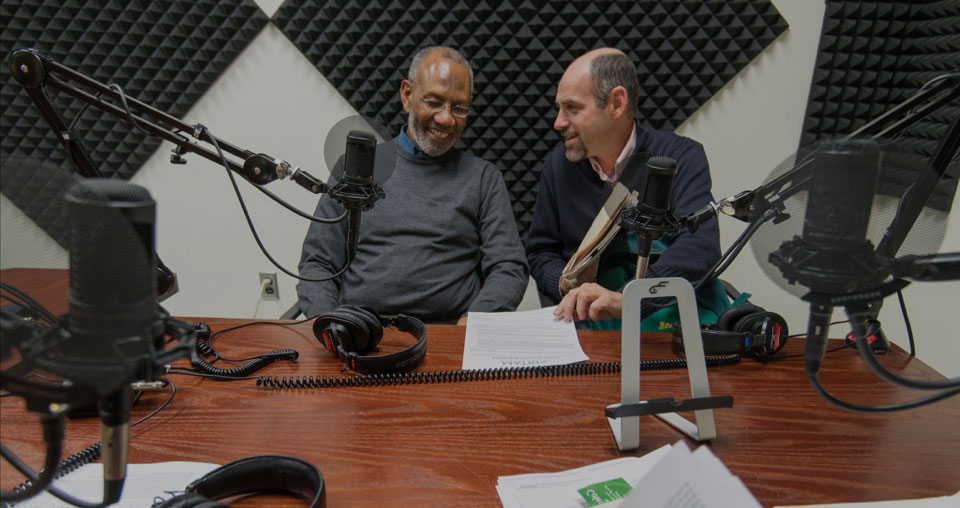
Oral History in the Digital Age logo The Library of Congress through The Signal: Digital Preservation blog recently posted an article about Doug Boyd, director of the Louie B. Nunn Center for Oral History at the University of Kentucky Libraries. In the post, Boyd talks about using digital technology to collect, curate, distribute, and preserve oral histories. Boyd recently partnered with MATRIX on ...

Vietnam Project Archive Receives Attention from the Lansing State Journal

The Lansing State Journal recently posted an article entitled MSU, the CIA— and Vietnam. This article contains portions of interviews with the primary investigators for the MSU Group Vietnam Project Archive, a digital preservation and access collaboration between the University Archives & Historical Collections at MSU and MATRIX. This project, which has received significant NEH ...

Archive for the ‘ User Experience Design ’ Category

Upcoming Project in Participatory Memory will Focus on Creating Interactive Digital Archives

Thursday, September 6th, 2012

Picture of locks on a paris bridge. The locks are an example of the way people in Paris are creating participatory memory of public spaces.Liza Potts, MATRIX Director of User Experience Design Projects, recently traveled to Paris, France in order to perform research and planning work for an upcoming project centered on the emerging idea of participatory memory.

Participatory memory examines the ways in which everyday people memorialize events outside of the officially sanctioned observations. Instead of accepting what government or authoritarian sources proclaim about “what really happened,” there is a rising tendency for people to add their own imprint to these spaces, sharing their own recollections of past events— especially the tragic. Participating within these official and often unofficial spaces, everyday people can offer additional commentary about the significance and meaning of those events. While these spaces may be seen as outside of the more “official” or sanctioned activities, there is great value in understanding how people react, inscribe, and cope within these spaces of memory.

Paris is a city that bursts with examples of this kind of activity— and for good reason. The city contains public spaces that house memories of tragic events, including the tunnel where Princess Diana was killed, the grave sites of Jim Morrison and Oscar Wilde, and memorials for several air crashes. There are also many signs of commemoration, whether it is marking spaces on the Eifel Tower or leaving behind a padlock signifying a romantic relationship on one of the city’s many bridges. Paris has cultivated a culture where active participation in contributing to public memorials is expected and somewhat accepted. The city is filled with spaces in which citizens and visitors have felt comfortable contributing to memorials: whether that be leaving flowers at a grave site, spray painting a messages to a lost idol, or leaving a kiss to a literary hero.

Although these creations of participatory memory are exciting and useful in revealing a new depth to our public remembrance of what happened at these sites, they are also temporary. Time and nature are not kind to chalked messages, taped up photos, or bouquets of roses. And government officials are increasingly investing more money in “cleaning up” these memorial sites. (At last count, the amount of money invested in “restoring” the Princess Diana memorial was over €60,000).

Potts is working on a way to digitally preserve these types of participatory memory activities. Her project focuses on ways to make connections between the physical spaces where these memories are being documented and a new digital space where those same memories could be preserved and shared. She hopes to build an interface that would allow contributors to these memorial sites to share their memories online and then explore the collective memorial through space (“How is this space physically constructed? What does this space look like?”) and time (“How does my memory fit into what others have contributed before me?”). Potts plans on leading a researched study abroad to Paris next summer that will work with students to address these questions and design and test an appropriate user experience.

Potts’ project in participatory memory fits in well with her work at MATRIX and with MATRIX’s larger commitment to the digital humanities and cultural heritage. Although MATRIX has worked to create archives previously, Potts’ attempt to create what she terms a “participatory archive” that digitally documents constantly changing, intrinsically transient, and inherently non-digital objects is a fairly new concept and one that pushes boundaries in the digital humanities. We are excited about this project and look forward to benefiting from the lessons learned about archiving participatory memory.

Samaritan Archives Project Receives International Press Attention

Thursday, June 28th, 2012

Image of one of the manuscripts that is being digitized as part of the Samaritan Archives project. Photo courtesy of Dr. Jim Ridolfo.On May 26th, the Haaretz Daily Newspaper, a popular Israeli news outlet, released a full-length article focused on the Samaritan Archive project, a collaborative endeavor lead by two U.S. researchers and universities: Dr. Jim Ridolfo of the University of Cincinnati (UC) and Dr. William Hart-Davidson of Michigan State University (MSU).

The article contained an extensive interview with Ridolfo, who is studying the Samaritan people’s attitudes towards the circulation of their books through a Middle East and North Africa Regional Research Fulbright fellowship. The Fulbright is split between the West Bank Fulbright program and the Israel Fulbright program, due to the fact that the Samaritan people live half in the Palestinian Authority, West Bank and half in Israel. Ridolfo talked about how he became interested in the Samaritan Archives during his time as a graduate student at MSU and how that initial interest grew into the dynamic and internationally acclaimed project it is today.

The Samaritan Archives project seeks to digitize thousands of ancient, sacred Samaritan texts and make them available to the Samaritan community that produced them. You may ask why, if the texts are Samaritan in origin, they are not already available to the Samaritan people. The answer is rooted in the Samaritan’s complex and chaotic past. In the eighteenth and nineteenth century, the Samaritan people faced a growing state of poverty. To counter this, they sold their ancient texts and manuscripts to foreign collectors in exchange for monetary goods.

One of these foreign collectors was a Michigan industrialist and philanthropist named Edward Warren. He bought a number of ancient manuscripts that were later donated to MSU by his children. It is these papers that have now become known as the Samaritan Archives.

In the Haaretz article, Ridolfo focuses on how this digitization effort has a strong user-experience component that goes along with it. The goal of this project is not just to make an online repository of Samaritan texts for scholarly purposes, but to create a digital tool that current Samaritans can use to reconnect with their ancient texts and culture. This could eventually include things like Facebook tools, websites, and cell-phone applications. The article focuses on the novelty of this approach saying, “This is an innovative approach that places an emphasis on the users of digitized data— in this case, the Samaritan community— while the project is being planned and designed.”

The Samaritan Archives project is another example of MATRIX’s commitment to digitizing endangered texts, designing user-centered interfaces, and building international partnerships. We are encouraged and excited that this work is being recognized by international news media and hope to engage in many more of these projects in the future. Says Ridolfo of his experiences in Israel, “I’m confident that the work I’ve done here will help make the ongoing grant work with MSU MATRIX and MSU WIDE that much more rewarding for the Samaritans. I’ve collected data that shows how such a cultural-digital infrastructure will matter to the lives of community members.”

To learn more about the Samaritan Archives, please read the Haaretz article (in both Hebrew and English), visit Jim Ridolfo’s personal website, or check out other international media that has also focused on this story— including the A.B. Samaritan news, the Samaritan’s only newspaper. Also, be on the lookout for Digital Samaritans, Ridolfo’s upcoming book on the Samaritan Archives project.

Matrix Faculty Member Publishes New Book on User-Centered Web Design

Monday, January 12th, 2009

Head First Web DesignAfter a year in development, Ethan Watrall has published his latest book, Head First Web Design.  Published by acclaimed technology publisher O’Reilly Media and co-authored by Jeff Siarto (http://www.jeffsiarto.com), Head First Web Design is the latest book in the award winning Head First series.  Head First Web Design is a true user-centered web design book, exploring topics such as pre-production, layout, color theory and color design, information design and architecture, usable navigation design, accessibility design, audience research, and user testing.

The Head First series is best know for using the latest research in cognitive science and learning theory to craft a multi-sensory learning experience.  Head First Web Design continues that tradition by using a visually rich format specifically designed to take advantage of the way the reader’s brain really works.

For more information on the book, including table of contents and sample chapters, visit http://www.headfirstlabs.com/books/hfwd/